12th March 2026
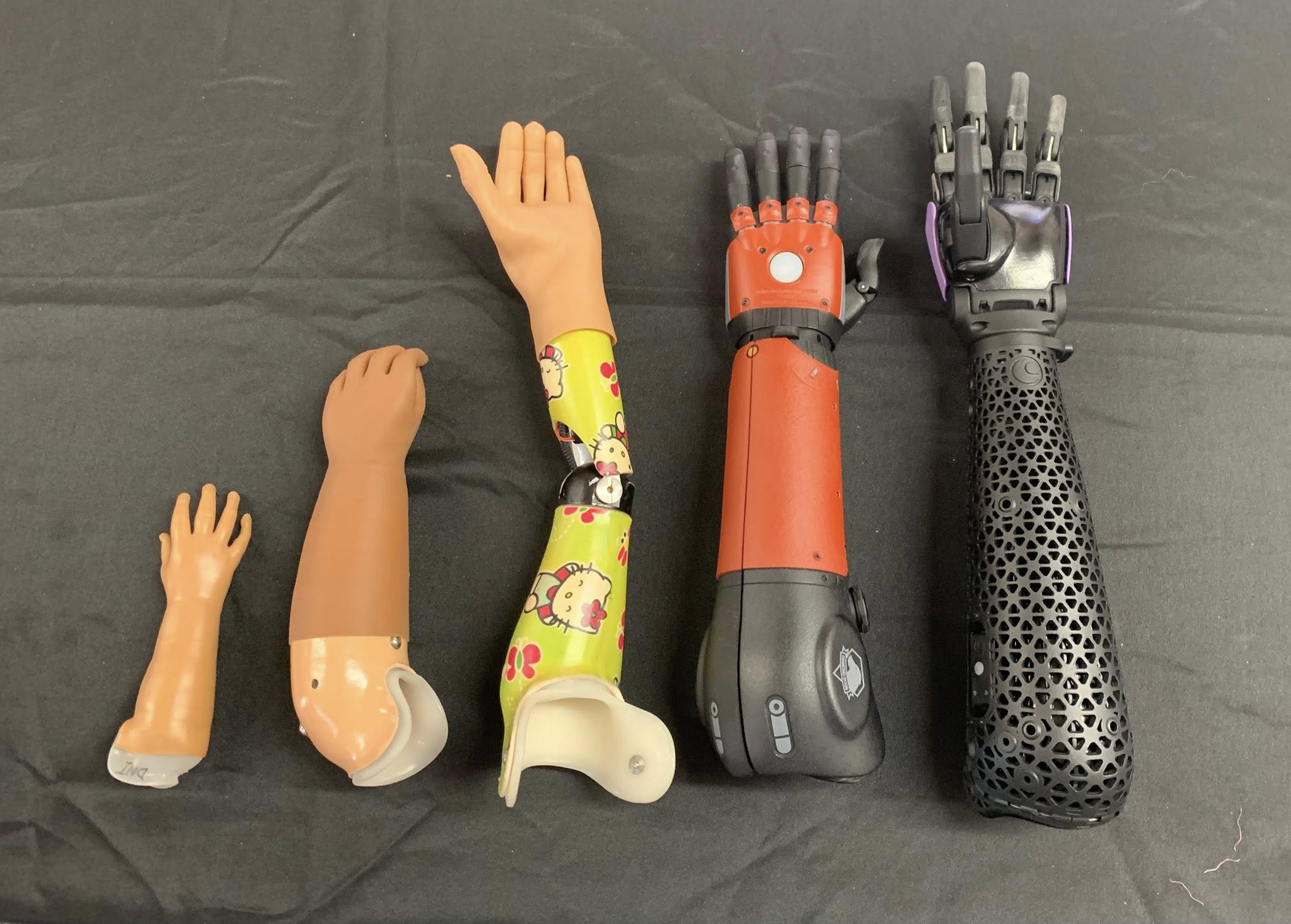
There are four main types of prosthetic arms: passive (cosmetic), body-powered, myoelectric (bionic), and activity-specific. Each type works differently and suits different people depending on their residual limb, lifestyle, and goals. Modern bionic arms like the Hero PRO and Hero RGD are myoelectric devices that translate muscle signals into multi-grip hand movement.
Understanding the different types of prosthetic arms is usually the first step for people exploring their options after limb loss or with a limb difference from birth. The categories can feel confusing. Cosmetic, body-powered, myoelectric, bionic: these terms appear regularly without explanation, and most resources do not explain who each type is actually right for.
This guide covers each prosthetic arm type clearly, explains how they work in practice, and shows where advanced bionic technology has moved the field forward in recent years.
Every upper-limb prosthesis falls into one of these four categories. Many people progress through more than one over time, or use different types for different purposes.
| Type | Active movement | Powered by | Best suited for |
| Passive / cosmetic | No | N/A | Stabilisation, symmetry, comfort |
| Body-powered | Yes (hook / hand) | Cables + harness | Durability, heavy work |
| Myoelectric (bionic) | Yes (multi-grip) | Electric motor + EMG sensors | Daily life, dexterity, expression |
| Activity-specific | Task-specific | Mechanical or passive | Sport, manual tasks, hobbies |
A passive prosthetic arm does not produce active movement. It is designed to restore the appearance and outline of a limb, assist with two-handed tasks through stabilisation, and reduce the physical asymmetry that can affect posture and shoulder health over time.
Passive arms are typically lightweight and low-maintenance. They are often the first device prescribed after a new upper-limb amputation, giving the wearer time to adjust to carrying a prosthesis before moving to a more functional type. People with congenital limb differences may also use a passive arm in specific social or professional contexts.
The device consists of a custom socket fitted to the residual limb and a prosthetic hand or partial hand shaped to match the opposite side. Modern versions are often lighter and more realistic than older designs, and can be fitted with cosmetic covers in a range of skin tones and finishes.
Passive arms are useful, but they are not the only option. Many people who begin with a passive device transition to a body-powered or myoelectric arm once they are ready to use it functionally.
A body-powered prosthetic arm uses a cable-and-harness system to create movement. When the wearer moves their shoulder, chest, or residual limb in specific ways, tension on the cable opens or closes a terminal device, typically a hook or mechanical hand.
Body-powered devices are durable and responsive. There is no battery, no electronics, and no charging required. Many users in physically demanding environments, including construction, farming, and manual trades, favour a body-powered device or activity attachment for its reliability and strength.
The main limitation is the harness. Wearing a body-powered arm across the shoulders and chest can become uncomfortable over long periods, and the range of functional grips is more limited than with a myoelectric device.
Body-powered technology has existed for over a century. The designs have improved, but the core mechanism remains the same. It is a reliable, proven option and still the right choice for many users and situations.
A myoelectric prosthetic arm is powered by a battery and controlled by the wearer’s own muscle signals. Small sensors inside the socket sit against the skin of the residual limb and detect electrical signals generated when the muscles contract. Those signals are translated into motor-driven movement in the prosthetic hand.
This type of control is called EMG (electromyography). The system reads two distinct muscle sites, typically flexor and extensor muscle groups, and uses their contraction patterns to switch between grip modes and open or close the hand. Most users learn the muscle patterns quickly, and control becomes intuitive within weeks of regular wear.
Modern multi-grip myoelectric hands like the Hero PRO offer eight or more grip patterns, allowing users to hold a pen, grip a steering wheel, pick up a cup, and operate a smartphone touchscreen with the same device. The Hero PRO achieves a full open-to-close cycle in 0.6 seconds, faster than comparable devices currently on the market, and includes a touchscreen-compatible fingertip on the index finger.
Myoelectric arms require charging, and until recently they required wired connections between the hand and the socket electrodes. The Hero PRO and Hero RGD are fully wireless, removing the cable that previously passed through the socket and reducing a common source of wear and reliability problems.
A myoelectric prosthetic arm is powered by a battery and controlled by the wearer’s own muscle signals. Small sensors inside the socket sit against the skin of the residual limb and detect electrical signals generated when the muscles contract. Those signals are translated into motor-driven movement in the prosthetic hand. To learn more about the mechanics, see how a bionic arm works.
This type of control is called EMG (electromyography). The system reads two distinct muscle sites, typically flexor and extensor muscle groups, and uses their contraction patterns to switch between grip modes and open or close the hand. Most users learn the muscle patterns quickly, and control becomes intuitive within weeks of regular wear.
Modern multi-grip myoelectric hands like the Hero PRO offer eight or more grip patterns, allowing users to hold a pen, grip a steering wheel, pick up a cup, and operate a smartphone touchscreen with the same device. The Hero PRO achieves a full open-to-close cycle in 0.6 seconds, faster than comparable devices currently on the market, and includes a touchscreen-compatible fingertip on the index finger.
Myoelectric arms require charging, and until recently they required wired connections between the hand and the socket electrodes. The Hero PRO and Hero RGD are fully wireless, removing the cable that previously passed through the socket and reducing a common source of wear and reliability problems.
The Hero PRO and Hero RGD are Open Bionics’ two multi-grip bionic hands, introduced in April 2025 after four years of development and feedback from around 1,000 existing users.
Both devices connect to the Hero Flex socket using a USMC-standard wrist connector, which allows users to switch between a bionic hand and an activity attachment in seconds without any tools or additional wiring.
“The arms are so much stronger. I can remove my own hand and have it crawl across a table and back to me controlling it via the wireless sensors in my socket. There literally isn’t a single other arm that can do this. No other arm is wireless and waterproof, and it’s faster than everything else while still being the lightest bionic hand.”
Tilly Lockey, bilateral Hero Arm user for nine years
Activity-specific prostheses are designed for a particular task or sport. Unlike passive or myoelectric arms, they are built around function over appearance. Common examples include devices for swimming, cycling, rock climbing, weightlifting, and drumming.
The Hero Flex is Open Bionics’ body-powered socket system designed to work with a growing range of activity attachments. It uses a USMC-style wrist connector compatible with more than 50 attachments from various suppliers. Attachments are waterproof, lightweight, and available in sizes for children and adults.
Activity arms are often used alongside a primary myoelectric device. A person might wear a Hero PRO for everyday tasks and switch to a Hero Flex with a cycling attachment for training. The modular design means no wiring changes are needed between configurations.
No single type of prosthetic arm is right for everyone. The decision depends on the level of limb difference, the muscle signals available in the residual limb, daily activity requirements, and personal priorities.
A certified prosthetist conducts a clinical assessment before recommending a device type. This covers residual limb anatomy, muscle signal testing, activity goals, and occupational needs. Many people start with a passive or body-powered arm and move to a myoelectric device as their rehabilitation progresses.
We operate specialist upper-limb prosthetic clinics across the United States, including locations in New York, Los Angeles, Chicago, Austin, Atlanta, Denver, Orlando, Charlotte, Nashville, and Pittsburgh. Each clinic is staffed by certified prosthetists who work exclusively on upper-limb cases.
If you are exploring prosthetic options for the first time, a free consultation is the most practical starting point. The clinical team can assess whether a myoelectric device is suitable for your limb presentation, explain the insurance process, and walk you through next steps.
There are four main types: passive (cosmetic) arms, which provide stabilization and appearance without active movement; body-powered arms, which use a cable-and-harness system to open and close a hook or hand; myoelectric arms, which translate muscle signals into motorized grip movement; and activity-specific arms, designed for particular sports or tasks.
A passive prosthetic arm does not produce active movement. It restores the outline and appearance of a limb, helps with two-handed stabilization tasks, and reduces the postural asymmetry that can cause shoulder strain over time. Passive arms are lightweight and often the first device prescribed after upper-limb amputation.
A body-powered arm uses physical shoulder or chest movement to pull a cable that opens or closes a terminal device. It requires no battery and is highly durable. A myoelectric arm is battery-powered and reads electrical signals from muscles in the residual limb, translating those signals into motorized grip movement. Myoelectric arms offer more grip variety and do not require a harness.
A bionic prosthetic arm is a myoelectric device with advanced motorized grip capabilities, individual finger movement, and intuitive EMG control. The Hero PRO and Hero RGD from Open Bionics are examples. They feature multiple grip modes, wrist flexion, fully wireless operation, and IPX7 waterproofing. The Hero PRO is the lightest multi-grip bionic arm currently available.
Yes. The Hero Arm is available for children from age five, making it one of the few clinically approved multi-grip myoelectric bionic arms for pediatric use. Children typically learn to control the device quickly. The lightweight design and modular covers make it practical and personalized for everyday school and home use.
The Hero Flex socket connects to a range of activity attachments for cycling, swimming, weightlifting, archery, rock climbing, and more. The Hero PRO and Hero RGD are both fully waterproof, allowing use in rain and water sports. A certified prosthetist at an Open Bionics clinic can advise on the right combination of socket, bionic hand, and attachments based on your specific activities.

 English
  USA
USA  German