10th March 2026
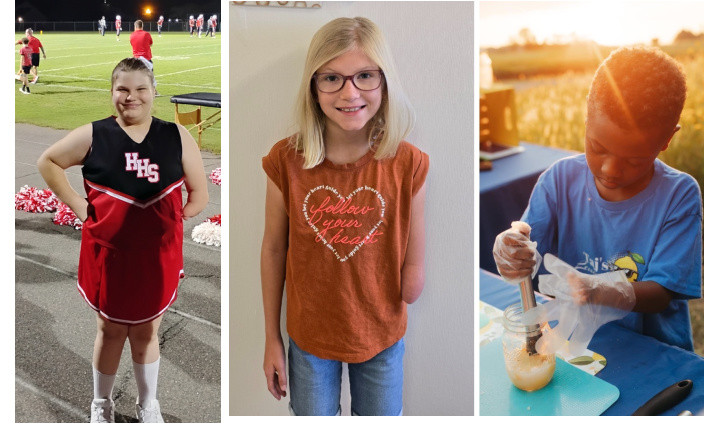
Remington was nine years old, born without a hand, and had clinical evidence supporting her need for a bionic arm. Her insurer, Select Health, denied the claim anyway, classifying a Hero Arm as not medically necessary. Her mother Jami described the decision plainly. “This device has a huge impact on her health and well-being, and that is what the insurance was supposed to deliver,” she said.
The family launched a GoFundMe campaign that went viral within hours, raising over $30,000. A company called CrowdHealth stepped in to cover Remi’s Hero Arm in full. Remi used the donated funds to buy a Hero Arm for Taj, an eight-year-old in Maryland who had faced the same denial. The GoFundMe has since raised over $50,000, enough to fund a third child’s device. “People shouldn’t have to have fundraisers to pay for something this important to a child’s health and well-being,” Jami said in a Washington Post interview. You can read Remi’s full story on the Open Bionics blog.
Remi’s case attracted national attention and sparked a broader conversation about how prosthetic insurance coverage works in practice. Coverage for advanced bionic arms varies significantly by insurer and plan. Documentation requirements are extensive, and initial denials are not uncommon. Understanding the process, and knowing what steps to take at each stage, can make a meaningful difference in outcome.
Prosthetic insurance coverage for advanced myoelectric devices requires documentation that establishes medical necessity. The standard varies by insurer and policy, but most claims involve a physician prescription outlining the clinical need, a formal clinical evaluation from a certified prosthetist, a functional assessment documenting current limitations and anticipated gains, and prior authorization before the device is ordered or fabricated.
Completing each of those steps does not guarantee approval. Insurers retain the right to interpret medical necessity according to their own policy criteria, which can differ significantly from clinical standards or the judgment of the treating team. Natalie, a Hero Arm user who went through a nine-month process before her initial claim was denied, said the experience revealed how disconnected insurer criteria can be from clinical reality. “It was fascinating that they wanted to know if I could open a jar beforehand,” Natalie said. “It makes me think that insurance doesn’t know what to ask or what is actually useful.”
Over 70 percent of Hero Arm orders across the United States are ultimately funded by insurance. Approval is achievable, but it often requires persistence, documentation, and clinical support throughout the process.
One of the most common grounds for denial is a determination that the device is cosmetic rather than medically necessary. For advanced bionic arms, this classification does not always reflect current clinical standards and can be reviewed through the appeals process.
Nicola, a bartender in New York City who pursued insurance approval for four years across three separate denials, described the frustration of that process directly. “Who are these people sitting behind a desk to tell me what I need and I don’t need?” she said. “You don’t even know what my day-to-day looks like to even make that judgment.”
Prosthetic insurance coverage outcomes vary considerably by plan and individual circumstances. Jackson’s claim was approved without issue. Nicola’s took four years and three denials. The difference between those outcomes comes down to the insurer, the policy language, and the quality of documentation prepared at each stage.
The cosmetic classification sometimes reflects policy language that predates recent advances in prosthetic technology. Open Bionics clinicians regularly identify appeals where the denial cites research that is no longer current, and use that gap as the basis for challenge.
Not every claim follows that path. Jackson, a 17-year-old high school athlete from San Jose, California, was born with a congenital right below-elbow limb difference and had tried several body-powered devices before discovering Open Bionics. He scheduled a free consultation at the Open Bionics clinic in Los Angeles, and his bionic arm was approved by health insurance without issue. “People are always curious, and I don’t mind talking about it,” Jackson said. “It just makes everything feel easier. I don’t have to plan around it as much.”
The difference between Remi’s experience and Jackson’s is not the device, the clinical need, or the quality of the application. Coverage outcomes vary by plan and by insurer, which is why strong documentation, clinical support, and familiarity with the appeals process matter so much from the outset.
A denial is not the end of the process. Most insurance policies include an appeals pathway, and a well-constructed appeal with strong clinical documentation has a meaningful chance of overturning the original decision. The strongest appeals engage directly with the insurer’s stated criteria rather than restating the original submission. If a denial cites outdated research or applies a definition of medical necessity that does not reflect current clinical evidence, the appeal addresses that gap with current peer-reviewed literature.
Logan’s prosthetic insurance coverage process started when he was ten years old and born without his left arm, when his mother Stacy began the process of obtaining a Hero Arm through the Open Bionics clinic in Orlando. Emily Shannon told Stacy upfront that a denial was likely and began preparing the appeal before it arrived. “Emily really set the expectations,” Stacy said. “She let us know that insurance would probably deny this right out of the gate, but I am going to work with you to appeal it.” Within days of receiving the denial letter, they had compiled clinical references and narratives justifying the device. Stacy wrote a supporting letter and Logan’s physician provided documentation. The appeal succeeded.
“It was really discouraging at first,” Stacy said. “But if we can fight this, others can fight this.” In her letter to the insurer, she pushed back on the experimental classification directly and argued the clinical necessity of the device. After the appeal was approved, Stacy had a message for other families in the same position. “Even if you don’t feel like you have the right to have a voice, you do,” she said. “And you have to fight for you.” Read Logan’s full story here.
Nicola’s case at the Open Bionics clinic in New York involved three denials over four years before her claim was finally approved. She had first tried to access a bionic arm in 2020. By the time she reached Open Bionics, her sound arm had begun showing early signs of arthritis from overuse. “There were quite a few times I thought this was never going to happen,” she said. Persistence and preparation across each stage of the appeal process ultimately changed the outcome. Read more about fighting insurance denials state by state.
For patients whose prosthetic insurance coverage through a private plan does not extend to advanced devices, government reimbursement programs offer an additional route. Open Bionics devices are PDAC approved and covered by multiple reimbursement pathways including Medicare, Medicaid, ChampVA, and Tricare. Aetna, Molina, Humana, and most Medicare Advantage plans have also been consistent in approving Hero Arm coverage.
Coverage policies vary by state and individual plan, and eligibility depends on clinical documentation and functional assessment. A consultation with an Open Bionics clinician can help determine which reimbursement pathways apply to a specific situation and what documentation will be needed to support the claim. The 2025 update to national coding that formally recognized 3D printing as an approved fabrication method for prosthetic devices also strengthened the reimbursement pathway for devices like Hero PRO and Hero RGD. That change is covered in full in the guide to 3D printed bionic arm insurance coverage.
Prosthetic insurance coverage is complex, and a denial can feel isolating. The practical reality is that patients who work with experienced clinical teams, prosthetists who know how to document medical necessity, frame appeals, and engage with insurer criteria, consistently achieve better outcomes than those who navigate the process without that support.
Open Bionics clinicians are involved in the prosthetic insurance coverage process from the initial consultation through to authorization and, where necessary, multiple stages of appeal. The goal is to remove as many barriers as possible between a patient and the device that would most improve their life. Open Bionics data shows that over 70 percent of Hero Arm orders in the United States are ultimately funded by insurance, a figure that reflects years of clinical work building the documentation, precedent, and appeal expertise that makes approvals possible.
If you are exploring prosthetic options and want to understand what coverage may be available to you, book a free consultation with an Open Bionics clinician. The team will walk you through eligibility, documentation requirements, and the reimbursement pathways that apply to your situation.
For a detailed guide to how Open Bionics clinicians handle the insurance submission and appeals process, and for information on the 2025 coding update that recognized 3D printing as an approved fabrication method, read:
Are 3D Printed Bionic Arms Covered by Insurance? Here’s What You Need to Know
Taking On Prosthetic Insurance Coverage Denials State-by-State and Winning

 English
  USA
USA  German